Software
Services
Resources

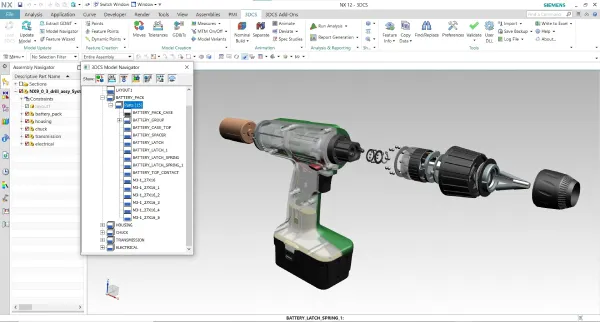
3DCS Variation Analyst leverages the CAD and PLM you’ve already invested in to identify and eliminate costly assembly issues — before tools are cut.
Every dimensional issue found in manufacturing costs 10× more to fix than one caught in design.
3DCS moves that discovery upstream.
Our simulation software create Digital Twins in order to simulate assembly processes and tolerance stacks using 3D models.
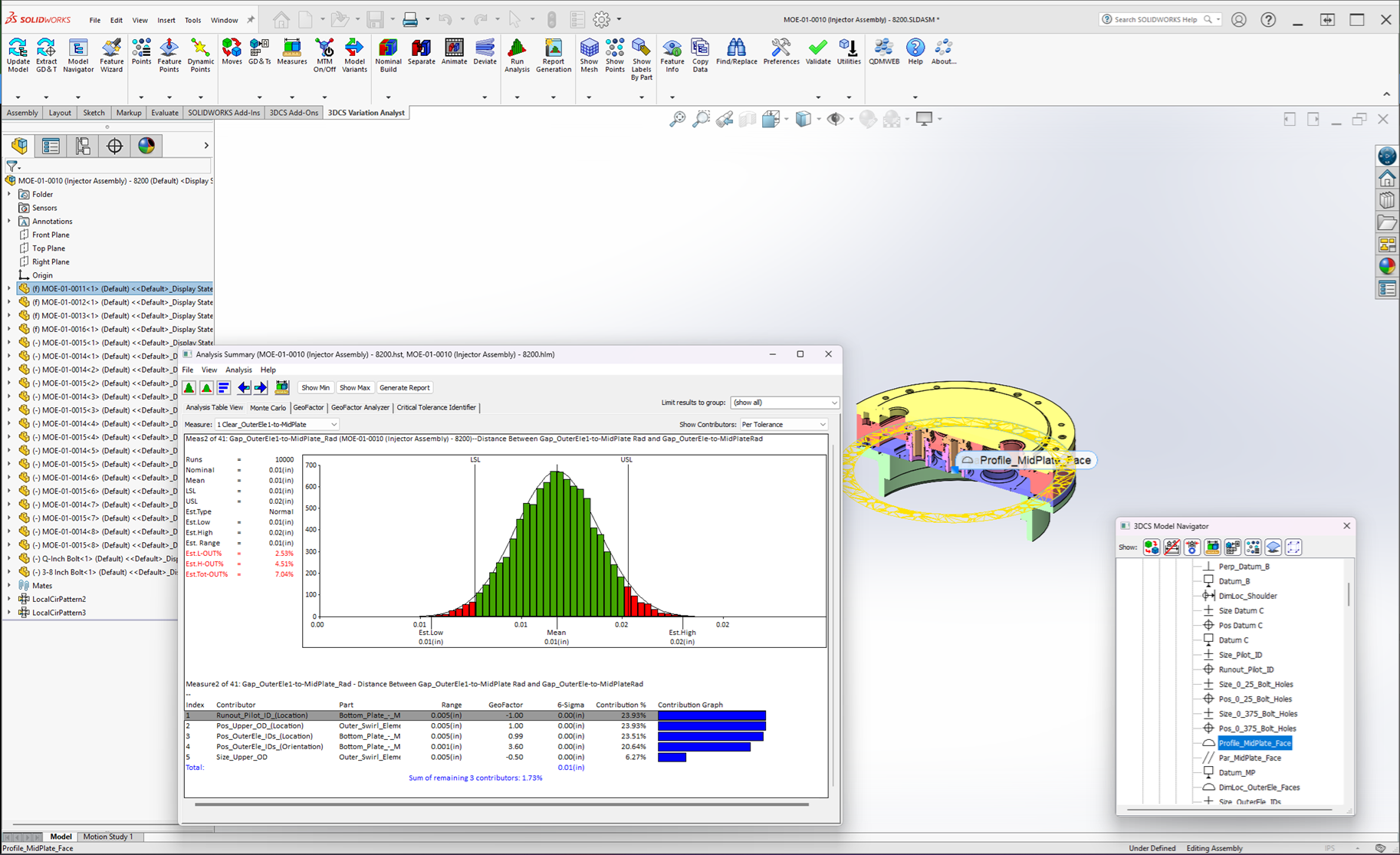
No export, no context switch. 3DCS runs natively where your engineers already work.
3DCS isn’t just a tolerance tool. It’s the starting point of a data thread that connects design intent to manufacturing reality.
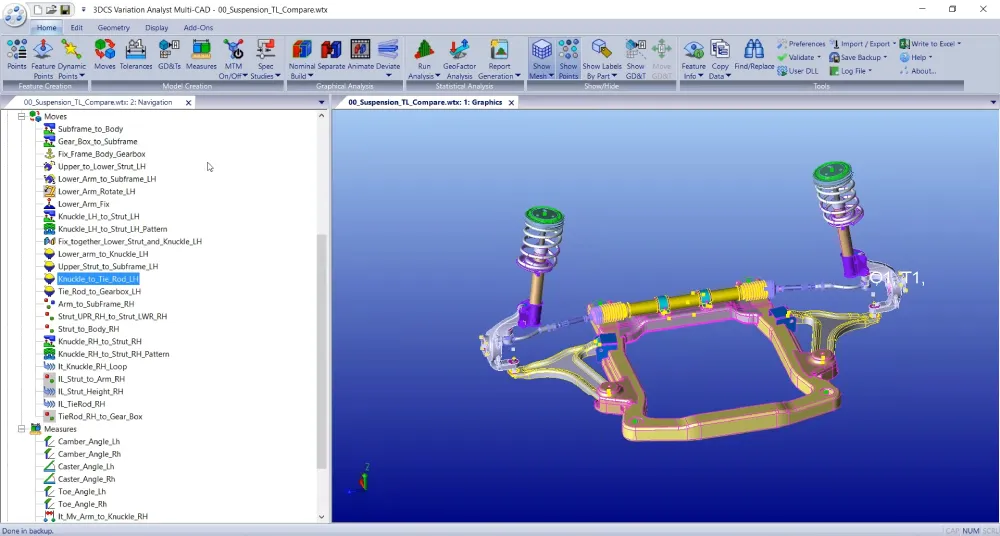
Build your 3DCS model inside your CAD. Define GD&T, locating schemes, and assembly sequences.
Run thousands of digital builds. Identify variation contributors, risk areas, and sensitivity before a single part is made.
Real measurement data from Metrolog feeds back into your model. Design decisions are validated against actual manufacturing capability.
Run digital builds inside your CAD. Test gap & flush, interference, and assembly yield — with no physical prototype.
Connect tolerance specs to actual measurement results. Replace assumptions with plant-floor evidence.
Sensitivity analysis shows which tolerances drive the most variation. Prioritize where tightening actually matters.
Import measurement data from the plant. Resolve root causes through your model — without stopping the line.
“3DCS allowed us to move from 2D stack-ups to full 3D analyses — our team can now identify issues in a matter of days instead of weeks.”
“We discovered sensitivities in areas we wouldn’t have expected — well outside our region of interest — that had significant influence on the beam.”
Our engineers will walk you through a demo tailored to your industry and CAD platform.
"*" indicates required fields

3DCS
Simulate assembly processes and analyze tolerances
Simulate your manufacturing and assembly processes to determine optimum methods and order.
Prepare your program, simulate offline with digital twins, run and control your inspection, analyze and correct in real time.
We're closing the loop on quality at IMTS 2026 — Sept 14–19
OUT NOW : Inspection Flow is live. Centralize your metrology data and close the quality loop.