
3DCS GD&T Tolerancing Benefits Webinar Tomorrow
Join DCS for a webinar by GD&T expert Gary Bell to learn how to use GD&T to drive quality downstream and create better tolerance simulation models.
- When: Thursday, August 25th, at 11 am EST
- How to Watch – Watch LIVE with GotoWebinar, ask questions, and interact with the presenters. You can also watch on-demand after the event by registering.
- Register HERE
What You’ll Learn:
- Legacy Tolerances vs GD&T
- Supported Features (Points, Features, Cylinders,…)
- GD&TPMI Extraction Benefits
- Location, Orientation & Form
- Datum Reference Frame (DRF) simulation
- 3D Surfaces
First, before we get into the webinar topics,
If you are unfamiliar with GD&T, please take a moment to familiarize yourself by clicking here
Legacy Tolerances vs GD&T
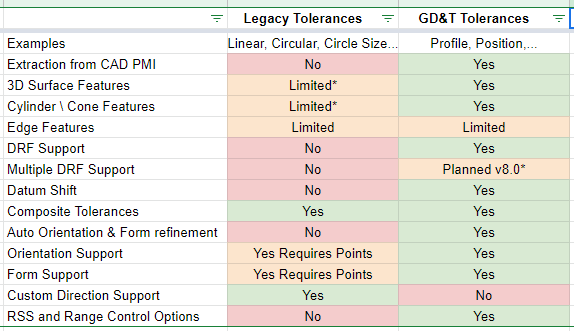
Anyone familiar with the origin of GD&T will understand why linear dimensions fail to provide accurate depictions of real-world outcomes.
Gary Bell will show each element, and explain how GD&T provides a more complete picture of what is happening in the real world while also including more forms of variation in the analysis without the need for special points, weird tricks, and workarounds.
Supported Features (Points, Features, Cylinders,…)
A brief discussion of what is supported using GD&T —
- Plane
- 3D Surface
- Slot & Tab
- Cylinder & Cone
- Sphere
- Torus
- Coordinate & Feature Points
- Point-Based Feature
- Edge – Limited direction control
GD&TPMI Extraction Benefits
See an example of how you can extract the GD&T, test and optimize it, and push it back to your model. Learn about the benefits of being able to pull and push GD&T into a 3DCS ‘test lab’, as well as speed up your modeling process. See mean shift, bonus tolerance, additional variation and shifts from Datums, and more.
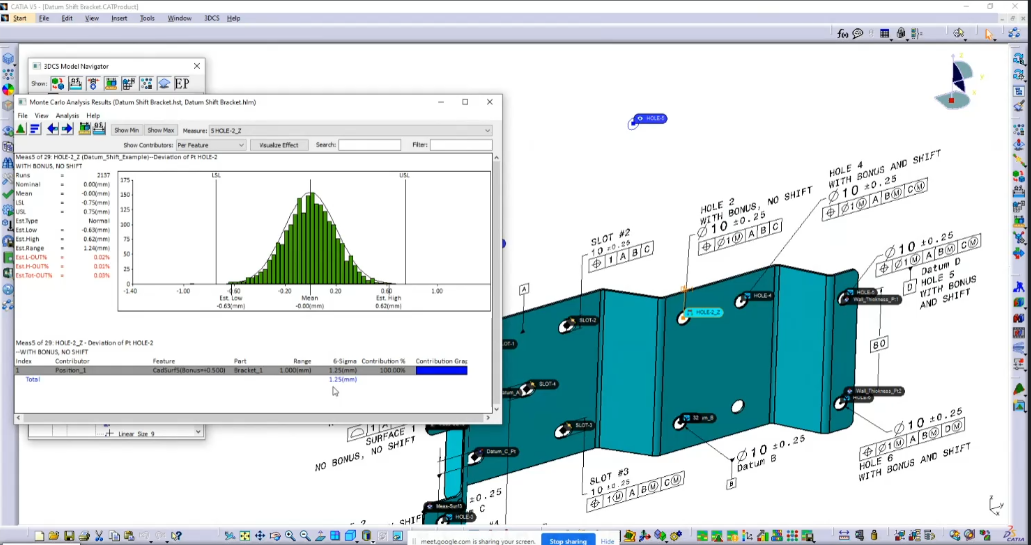
Location, Orientation & Form
With GD&T, all three can be controlled automatically. Gary Bell walks through how the system reads the GD&T, while providing tips for using GD&T on your models.
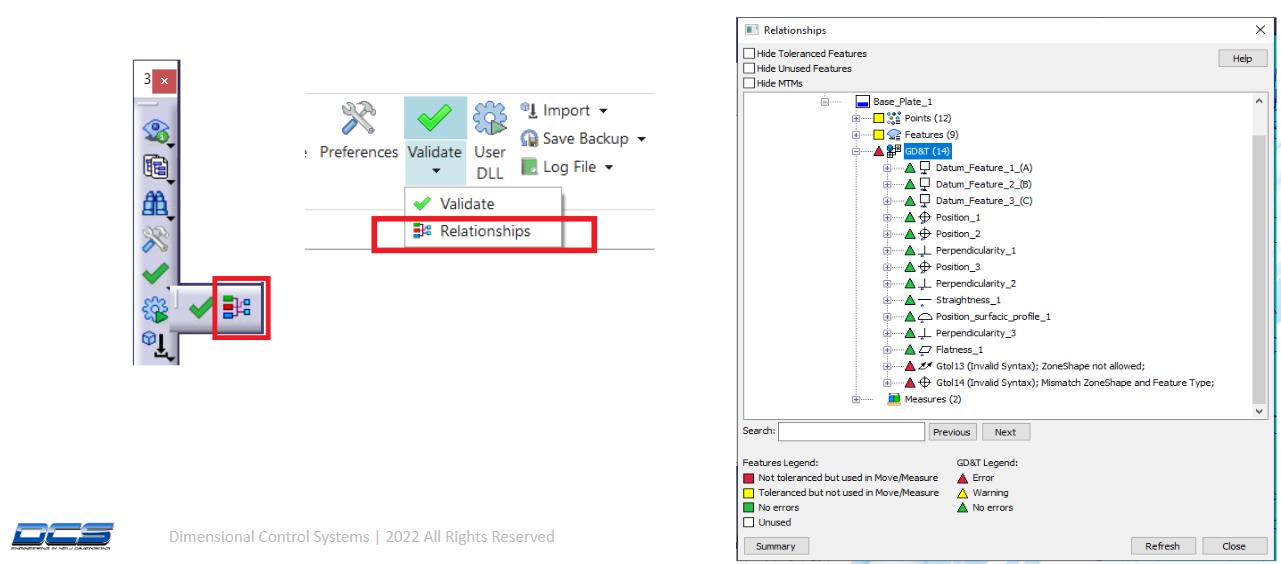
GD&T Support with the Relationship Wizard – Get Help Adding GD&T
See how 3DCS supports writing GD&T onto your model, and checks your callouts to keep you from adding bad, or wrong GD&T on your parts.
Datum Reference Frame (DRF) simulation
This dialog shows GD&T errors and warnings, or if features are used or not used in GD&T but are used in other MTMs.
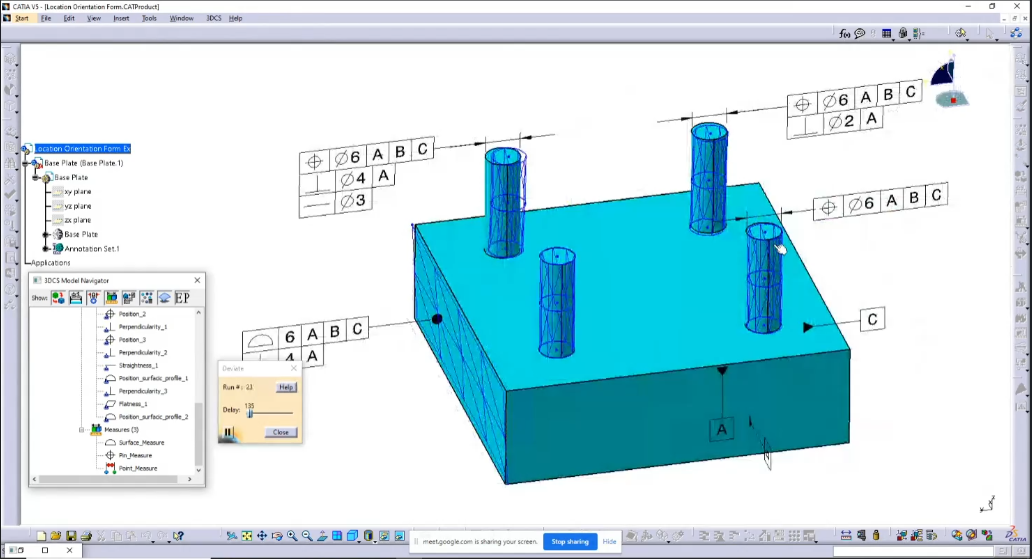
3D Surfaces
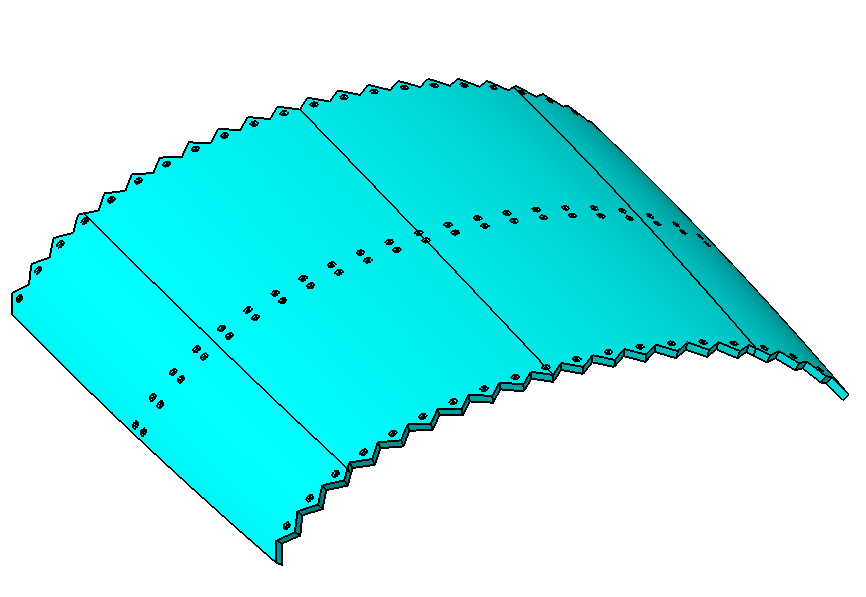
- A Profile on a curved surface will deviate each mesh node normal to the surface
- Not possible with standard Linear Tolerance
Register FREE for the Webinar, and join us for the live event or afterward to watch On-Demand –>